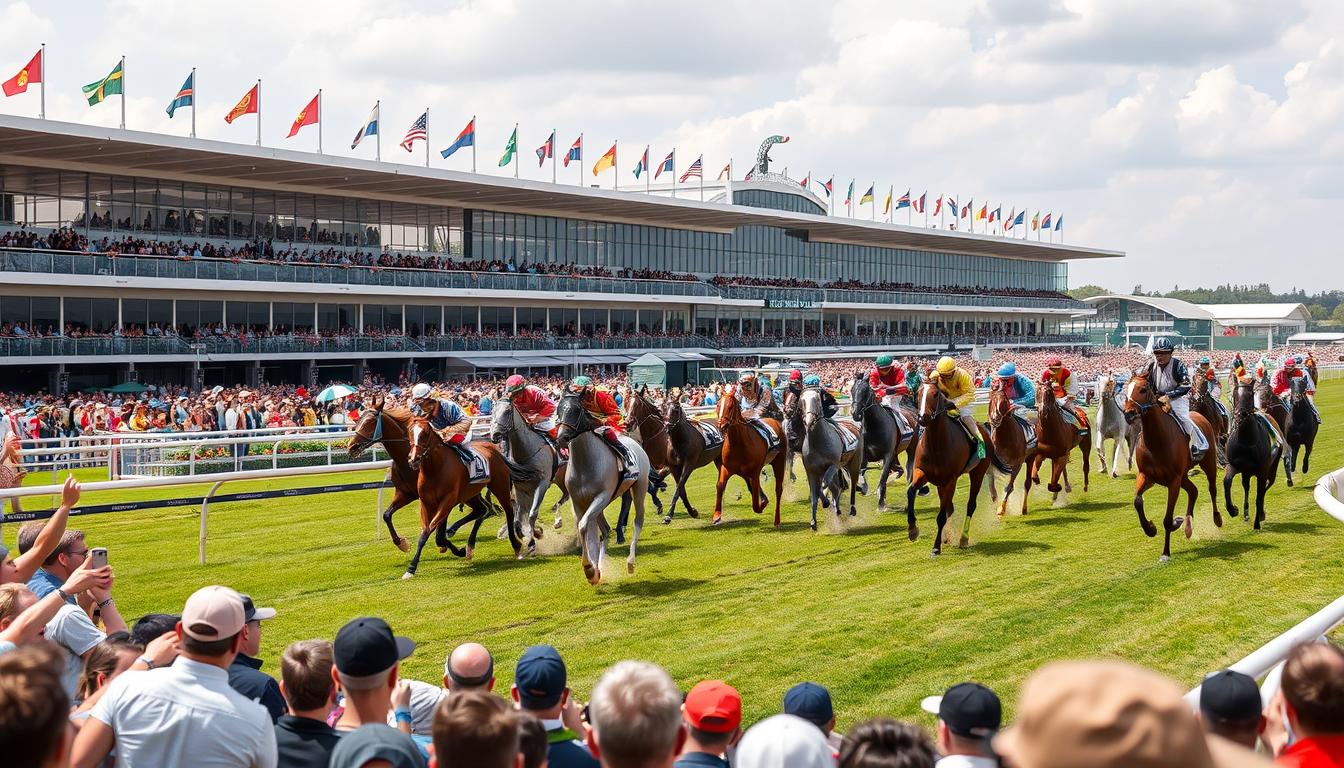
You want to win more often and avoid costly mistakes when betting on horse races. Avoid relying on gut feeling, chasing losses, or ignoring form and track conditions — these habits erode your bankroll faster than bad luck.
This post breaks down the common errors that trip up bettors, from poor bankroll management to skipping basic research, and shows practical changes you can apply immediately. Expect clear, actionable tips that help you bet smarter and keep gambling responsible.
Understanding Horse Racing Betting
You will learn the practical bet types, essential jargon, and how odds translate to risk and payout. Focus on what you can place, what each term means for your stake, and how to compare prices across tracks or books.
Types of Bets in Horse Racing
Bet types fall into two categories: single-race bets and multi-race wagers. Single-race bets include:
- Win — you pick the horse that finishes first.
- Place — you win if your horse finishes first or second.
- Show — you win if your horse finishes first, second, or third.
These are the simplest bets and carry the lowest complexity.
Exotic bets require more skill and offer higher payouts:
- Exacta — pick first and second in exact order.
- Quinella — pick first and second in any order.
- Trifecta — pick first, second, third in exact order.
- Superfecta — pick first through fourth in exact order.
You can also place daily doubles, pick 3/4/6 across consecutive races, and box or wheeling options to cover multiple permutations. Use boxes to cover all orders and wheels to fix one position while varying others.
Key Terms Every Bettor Should Know
Learn the vocabulary that affects decisions and payouts:
- Parimutuel — pool-based betting where betting pool minus takeout is split among winners.
- Takeout — percentage the track keeps; it reduces your effective payout.
- Favorite/Longshot — favorite has lowest odds; longshot has high odds and lower implied probability.
- Morning line — a track’s opening odds estimate; the public can move them.
- Scratch — a horse removed from a race; it can change pool distributions.
These terms influence strategy and bankroll management.
Understand performance-specific words:
- Handicap — assigned weight to equalize chances.
- Claiming race — horses for sale at a specified price.
- Form — a horse’s recent race results and times.
Use form lines and program notes to judge fitness, class, and suitability to distance or surface.
How Odds Work in Horse Racing
Odds represent the amount returned on a winning stake and imply probability. In parimutuel betting, odds are dynamic: they change as money is wagered and reflect the final pool distribution after takeout.
Read odds formats correctly:
- Fractional (e.g., 5/1) — you win 5 units for each 1 unit staked, plus your stake.
- Decimal (e.g., 6.00) — total payout including stake; easier to compare across books.
- American (+500 / -200) — positive shows profit on $100, negative shows amount needed to win $100.
Calculate implied probability by dividing the denominator by the sum (fractional) or using 1/decimal for decimal odds. Compare implied probability to your assessment of the horse’s chance to find value.
5 Common Mistakes to Avoid in Horse Racing Betting
Focus on concrete, track-level factors, bankroll discipline, and realistic analysis. Small details—recent race times, rail bias, post position history—often determine whether a bet wins or loses.
Overlooking Horse Performance and Form
You must examine the horse’s last 3–5 starts, not just the most recent result. Look for consistent speed figures, finishing positions, and whether the horse improved under a particular jockey or trainer.
Pay attention to race class changes: dropping from allowance to claiming can signal easier competition, while a step up often reduces a horse’s win chances.
Check split times and closing speed when available. A horse that shows strong late fractions in similar distance races tends to maintain that edge.
Also review equipment changes and layoffs. Blinkers on/off, shoeing changes, or a long rest can materially affect performance and should alter your bet sizing or selection.
Ignoring Track and Weather Conditions
Track surface and condition directly affect performance; a horse that excels on fast dirt may falter on wet, muddy, or sloppy tracks.
Study each horse’s past results by surface and condition. Some horses have explicit “mudders” profiles; others lose multiple lengths on off tracks.
Factor in post position relative to track bias. Inside posts may be disadvantaged on tight turns when the rail favors speed.
Monitor the weather forecast and how it will change track conditions during the card. If rain is likely, adjust your selections to horses with proven off-track records and re-evaluate pace scenarios accordingly.
Chasing Losses After Bad Bets
Chasing losses destroys disciplined staking plans and increases long-term risk. When you lose, reassess the decision—was the research flawed or was variance the cause?
Set a session loss limit and stick to it. Decide in advance how much of your bankroll you will risk per day and per race to prevent emotional over-betting.
Use fixed-percentage staking or flat bets instead of raising sizes after losses. That method preserves capital and forces you to evaluate strategy rather than emotions.
Review losing bets objectively: record the rationale, outcome, and any missed factors. Learning from mistakes reduces repetition and improves future decision-making.
Common Pitfalls in Bankroll Management
You need concrete rules that protect your funds and keep emotions out of decisions. Focus on stake sizing, loss limits, and consistent record-keeping.
Betting Above Your Limits
Betting above your limits happens when you stake amounts that threaten your ability to continue after a losing streak. Set a fixed percentage of your active bankroll for single wagers — most disciplined bettors use between 1% and 3% per race. If you bet 2% on a $1,000 bankroll, your maximum wager is $20; that keeps losses manageable and prevents a single mistake from derailing your account.
Emotional swings often drive oversizing. When you chase a loss or overcommit after a win, you increase variance and risk ruin. Use automated bet sizing or pre-set wager slips on your platform to enforce limits and remove impulse decisions.
Lack of a Clear Staking Plan
A staking plan defines how much you bet relative to your bankroll and objectives. Choose a strategy that matches your risk tolerance: flat staking (same stake every race), percentage staking (stake = fixed % of bankroll), or graded staking (stake varies by confidence). Document the plan in writing and update it only after you review at predefined intervals, such as monthly or after a 10% bankroll change.
Without a written plan you make ad‑hoc bets that amplify losses. Track every bet in a simple table: date, race, stake, odds, result, and bankroll after the race. Review the table weekly to spot leaks — recurring poor bets, unsuitable bet types, or rules you consistently break.
The Importance of Research and Analysis
Good betting decisions come from checking hard data and comparing recent race conditions, not from wishful thinking. Focus on quantifiable performance, current form, and how specific variables like track surface and race distance affect outcomes.
Neglecting to Study Jockey and Trainer Statistics
You must track jockey and trainer performance across similar race types and surfaces. Look for metrics such as win rate over the past 90 days, strike rate in the same class, and return on investment (ROI) when pairing particular jockeys with specific trainers.
Create a simple table to compare critical figures:
| Metric | Why it matters |
|---|---|
| Jockey win % (90 days) | Indicates current form and decision-making under pressure |
| Trainer win % (same distance/surface) | Shows preparation success for that race profile |
| Jockey-trainer combo % | Reveals established working relationships that boost performance |
| Recent top-3 finishes | Captures consistency beyond isolated wins |
Give weight to recent samples (last 30–90 days) over career totals. Small sample sizes can mislead, so combine percentages with the number of rides to avoid overvaluing flukes.
Relying Solely on Tips or Rumors
You should treat tips as starting points, not final answers. Verify every tip against race replays, sectional times, and official declarations before staking money.
Use a checklist before placing a bet:
- Confirm horse fitness: recent gallops and vet notes.
- Check race-day variables: track bias, rail draw, and likely pace scenario.
- Cross-reference multiple tip sources and public betting percentages.
Avoid social media hearsay and late-breaking gossip without evidence. Public tips often reflect opinion rather than measurable advantage, and blindly following them increases your exposure to losing streaks.
Strategic Approaches for Successful Betting
Focus on repeatable rules, disciplined bankroll control, and extracting specific performance signals from race data. Prioritize measurable edges like pace figures, class drops, and track biases when placing bets.
Developing a Consistent Betting Strategy
Create a written plan that defines bet types, stake sizes, and entry criteria. For example: flat betting of 1.5%–3% of your bankroll per bet, strict limits on exotic wagers (no more than 20% of weekly stakes), and only backing horses meeting at least three predefined performance filters.
Use objective filters such as last three-race speed figures, trainer strike rate at the distance, and jockey win percentage. Combine filters with situational rules: avoid betting horses making first-time starts after long layoffs unless they have recent fast workout times.
Track every wager in a spreadsheet or app with columns for date, race, horse, odds, stake, result, and ROI. Review that log weekly and adjust only when a clear pattern shows your rules underperforming.
Reviewing Past Races to Inform Decisions
Watch full race replays, not just charts, to detect running style, trip issues, and finishing strength. Note whether a horse closed from far back due to traffic or ran on strongly in clean air; these details change how you value them in future pace scenarios.
Analyze finish margins, sectional times, and pace maps for the last four to six races. Record consistent class levels beaten and whether the horse improves or regresses off certain ground or track configurations.
Compare each horse’s recent form against today’s race shape: projected early speed, late closers, and how the course has played (favoring front-runners or closers). Use a short checklist before betting: trip context, tactical fit, class parity, and current odds value.
Responsible Gambling Practices
You should set a strict budget before you place any bets and treat it as non-negotiable. Use only money you can afford to lose and never chase losses to try to recover them.
Establish time limits for betting sessions and take regular breaks to avoid fatigue and impulsive decisions. Short, planned sessions help you stay focused and consistent.
Keep records of your wagers, outcomes, and rationale to identify patterns in your behavior and performance. Reviewing your history helps you spot tilt, overconfidence, or recurring mistakes.
Use available tools from licensed operators: deposit limits, loss limits, self-exclusion, and reality checks. These features give you concrete control and can prevent escalation.
Recognize signs of problem gambling: betting more than planned, neglecting responsibilities, or feeling anxious about money. If you notice these signs, seek help early.
Resources:
- National helplines: call if you need immediate support.
- Counseling and support groups: consider professional help for behavioral change.
- Self-assessment tests: use them to gauge risk and adjust your approach.
Conclusion
You can reduce losses by avoiding the five common mistakes outlined earlier. Prioritize research, manage your bankroll, and remain disciplined in bet selection.
Keep records of your bets and review them regularly. Small adjustments to your strategy will compound into clearer patterns and better decisions.
Rely on data and observable form over tips or hunches. That practice reduces emotional betting and improves consistency.
Use stake limits and set a clear session plan before you start. Doing so protects your funds and helps you gamble responsibly.
Focus on continuous learning. The more you refine your process, the more predictable your outcomes become.